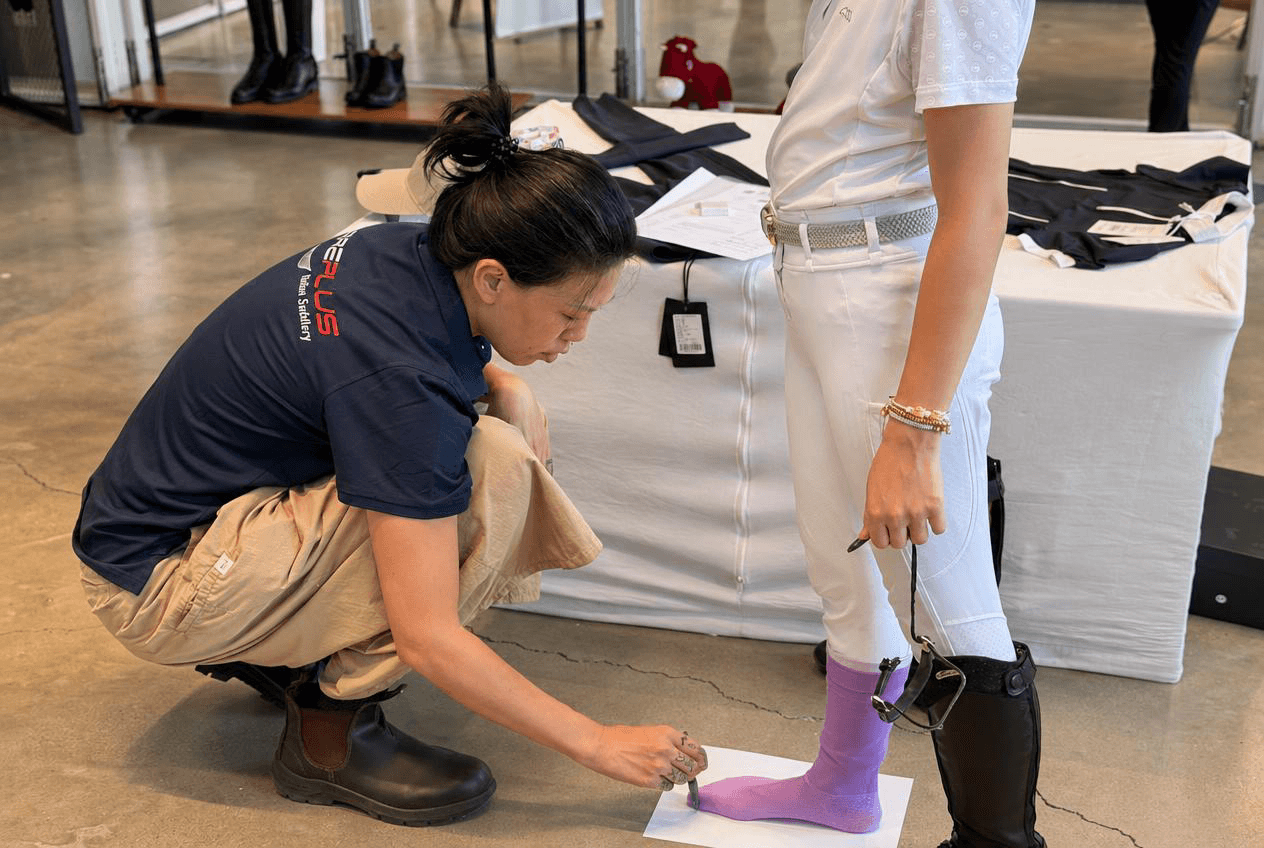

Between rounds, a closer look at fit.
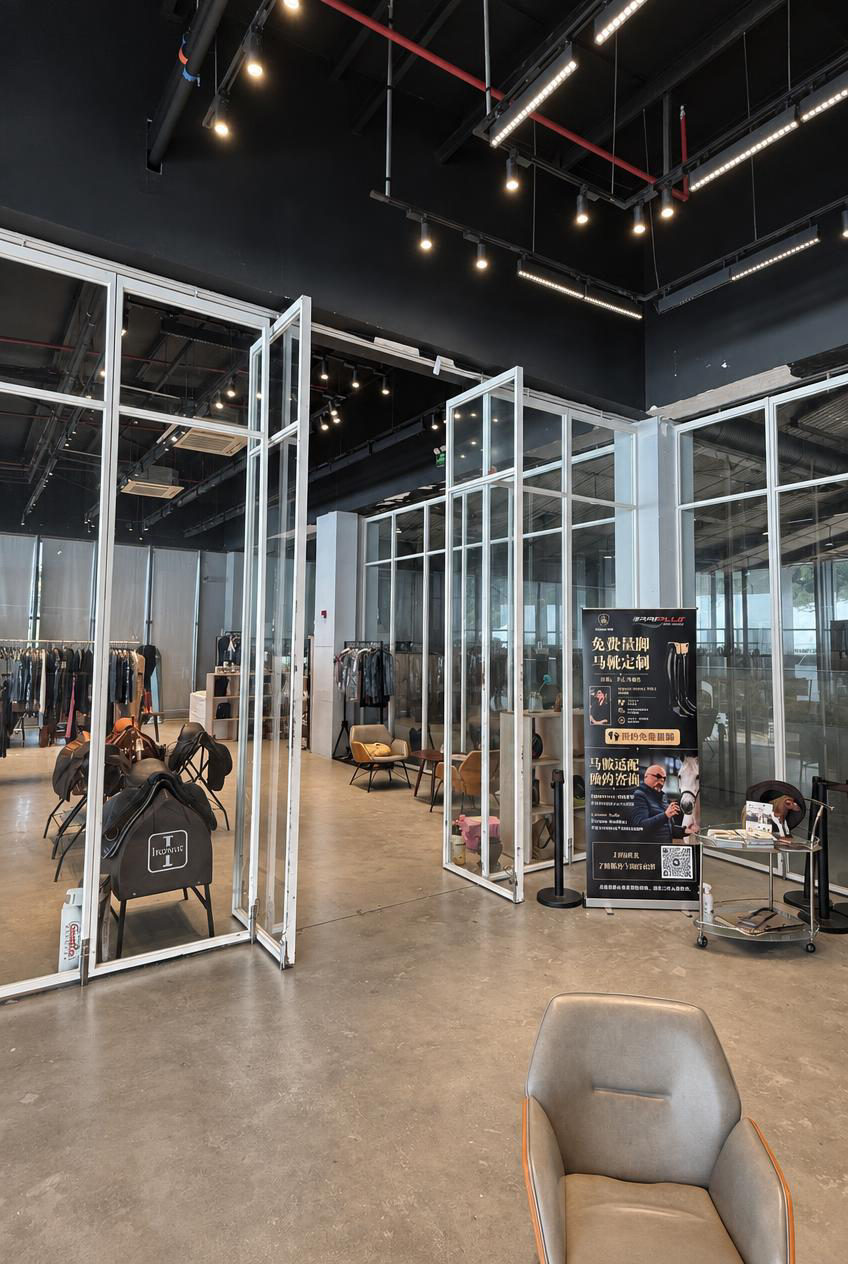
During the sixth round of the Guangdong Equestrian League, Eques Trio invited Bits & Boots to bring boot fitting to William. A fitting table, two boot styles and a catalogue offered a place to pause outside the arena and begin a conversation about the wearer’s own feet and riding experience.
Stephanie Keung led the fitting on 26 September, with the team continuing the service on the following day. Complimentary foot measurement and bespoke consultations brought specialist attention within reach of riders, coaches and equestrian enthusiasts.
Stephanie’s work spans saddle fitting and equipment selection. On this occasion, the focus was the riding boot: observe, measure and understand the wearer before discussing a suitable choice.
At the fitting table
Beyond shoe size, a matter of proportion.
Two people wearing the same shoe size may have different foot widths, insteps and ankle proportions. Left and right sides need not be identical either. A tall boot also has to accommodate calf width and leg length. A comfortable footbed alone cannot resolve a shaft that is too loose, too tight or the wrong height.
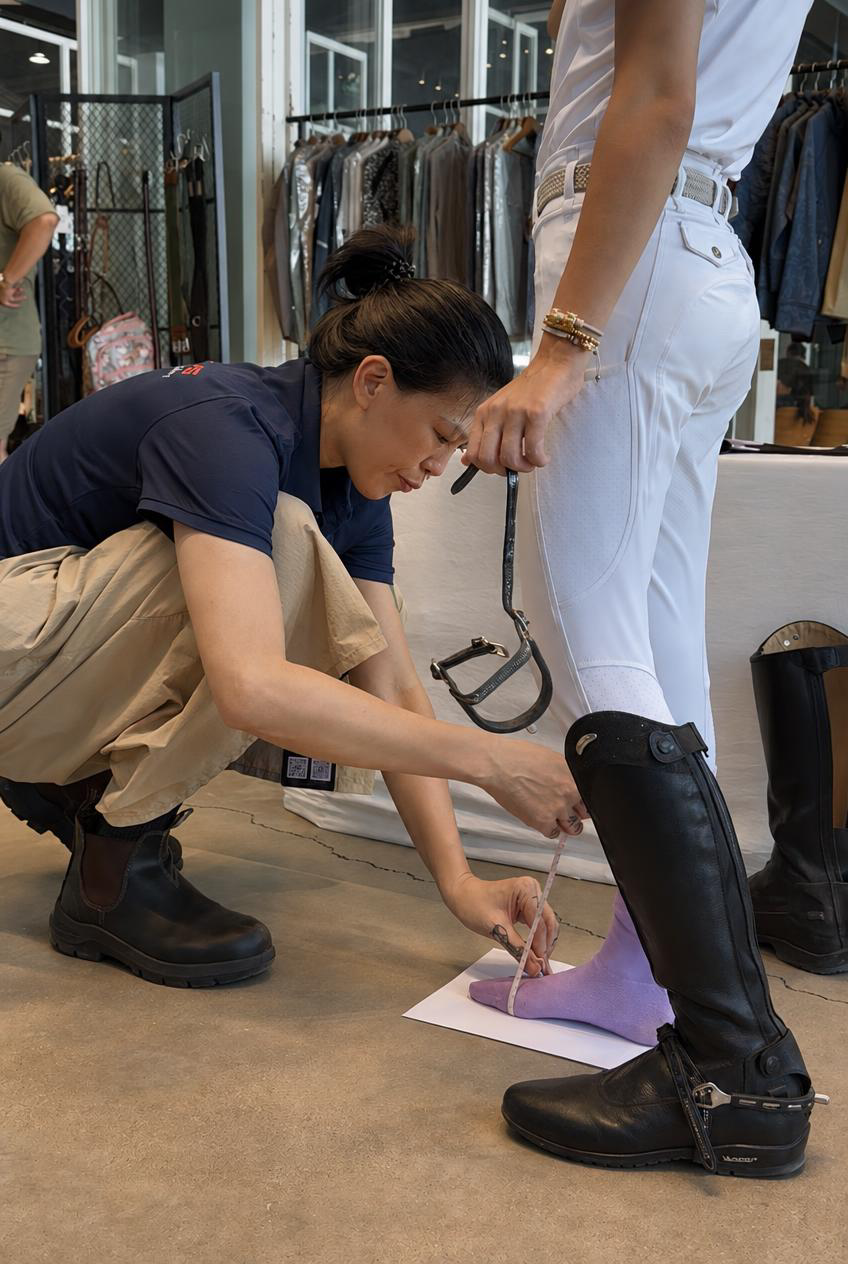
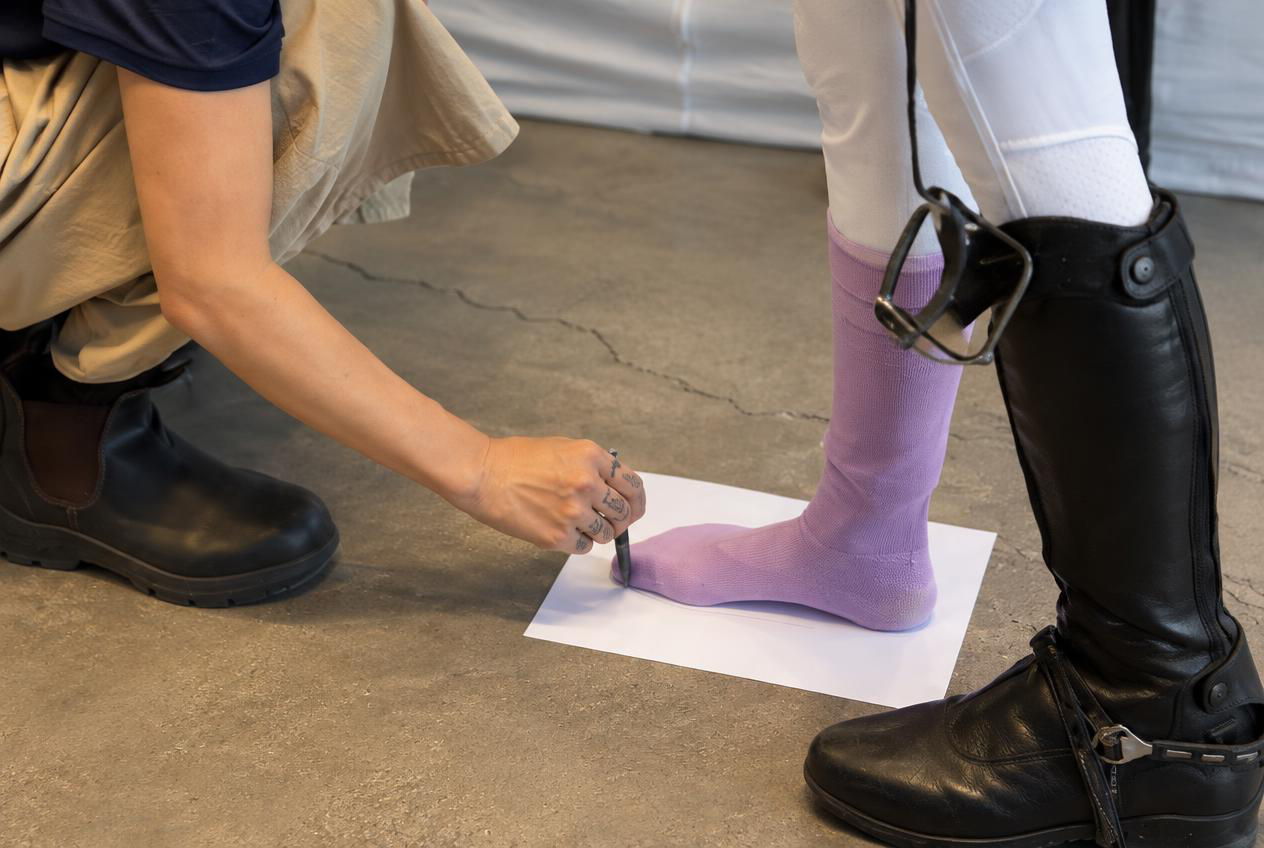
The photographs show one part of the process: recording the outline of the foot. This begins a record of its shape. A full fitting brings that outline together with further measurements, a try-on and the wearer’s observations about their existing equipment.
Bespoke work gives these differences individual attention. Understanding the proportions comes before discussing the boot style and construction options, allowing the fitting to be shaped around the person who will wear it.

Close to the leg. Room to move.
A tall boot should sit securely around the calf while accommodating ankle movement. Excess room can create deep folds and friction at the ankle; excessive tightness can cause pressure. Pain, numbness or persistent pinching should be raised with the fitter.
Leather softens with wear and the shaft may settle. Initial height and closeness of fit should be assessed for the particular style, wearing the breeches and socks normally used for riding.
Well-fitting equipment leaves less to distract the rider. Leg position and aids remain matters of training; an instructor’s observations and the wearer’s experience can both help inform the fitting conversation.
A study of fitting details
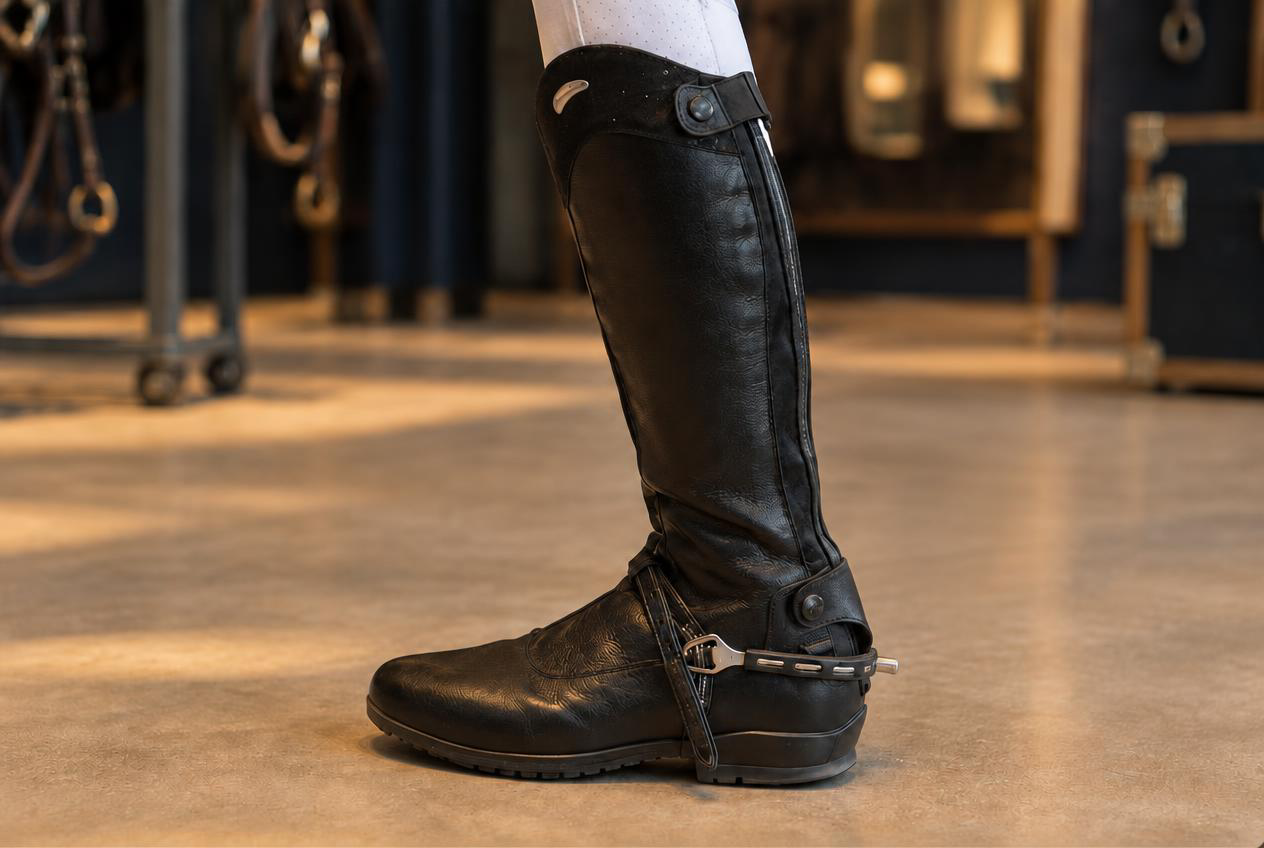

The boot and stirrup belong in the same conversation.
Fit is one part of choosing riding footwear. BHS guidance also considers the heel, sole and tread, avoiding footwear that can catch in a stirrup. The stirrup width must suit the boot being worn.
The stirrup in the photograph brings the boot back into its riding context. When changing to a different sole or a wider boot, ask the instructor to check its compatibility with the stirrup.
Leather and cut reward a closer look. So does the complete equipment check before mounting.

Bring your riding habits to the fitting.
A fitting is a conversation. Alongside the measurements, explain the socks and breeches you usually wear, your main riding discipline and what feels comfortable or uncomfortable in your current boots. A specific observation is more useful than simply asking for a tighter fit.
Notice how the boot feels while standing, sitting and bending the knee and ankle. Before a bespoke order, discuss the measurements for each side, the chosen style, production timing and the try-on after delivery, so the original consultation continues through to the finished pair.
- Bring your usual riding socks and breeches, and your current boots if practical.
- Describe where slipping, rubbing or pressure occurs, and during which movement.
- Record each side separately and assess calf width and height for the chosen style.
- Discuss settling-in, the try-on after delivery and arrangements for any adjustment.

Let the fitting conversation continue.
The William gathering placed boot fitting where riders use their equipment. For Eques Trio, connecting a venue with specialist partners also creates space for the community to observe, ask questions and understand the craft.
To explore future boot-fitting sessions or discuss equipment needs with Stephanie Keung and the Bits & Boots team, contact Eques Trio. Begin with a clear record of how your current boots feel, and bring those observations to the next fitting.