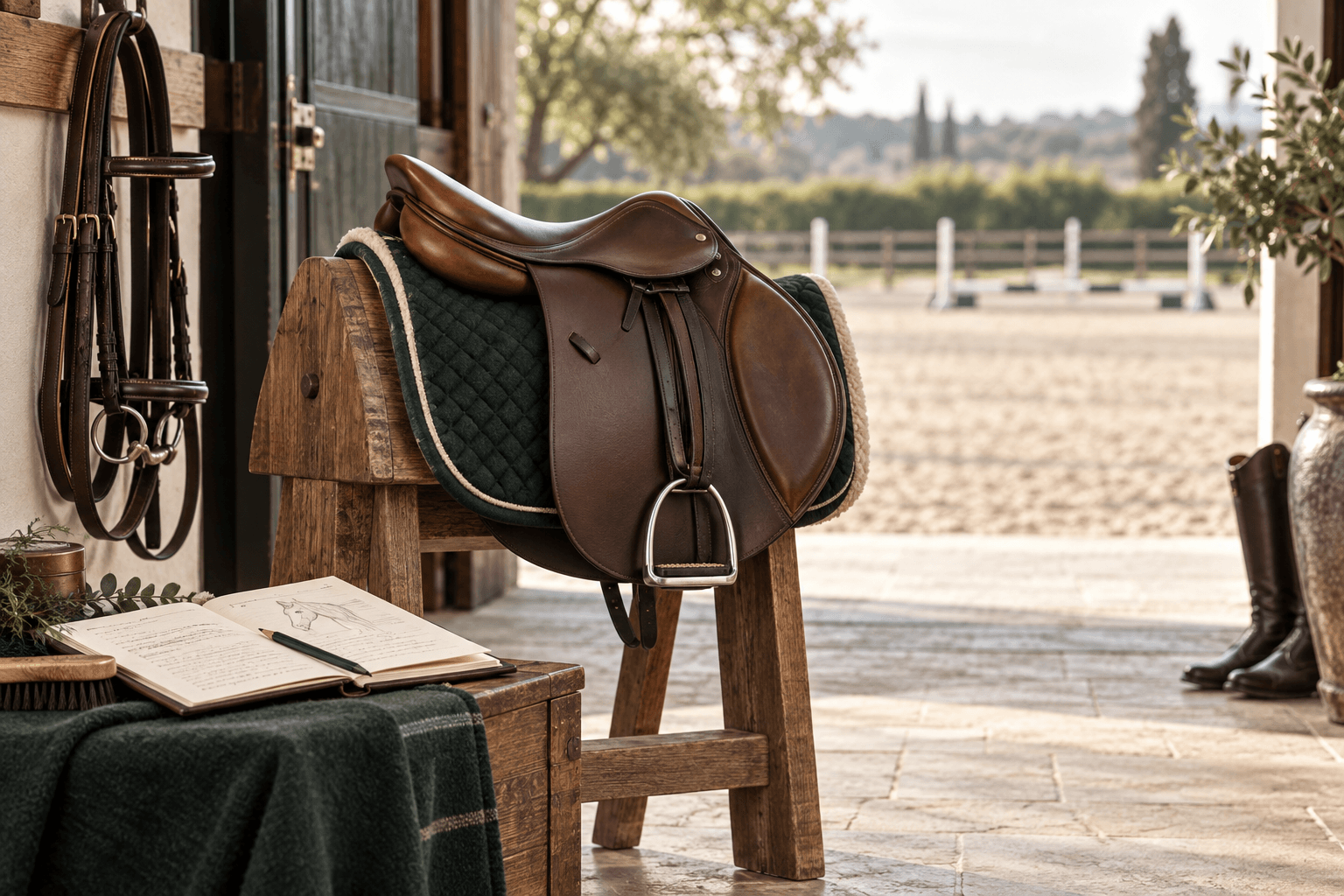

Describe experience, rather than a level.
A few rides can describe very different experiences. Note your most recent ride, previous lesson formats, any break in learning and feedback from instructors. This gives a new instructor more context than a simple beginner or intermediate label.
Your history provides context. The instructor’s observation should guide the exercises and learning programme.

Focus the next conversation.
You may want to understand balance, the horse’s response or how to give regular lessons more direction. Put the question into a specific sentence that can guide observation and reflection.
Separate a long-term interest from the immediate lesson. Jumping or dressage can provide a direction, while the next lesson begins with current experience and the instructor’s assessment.
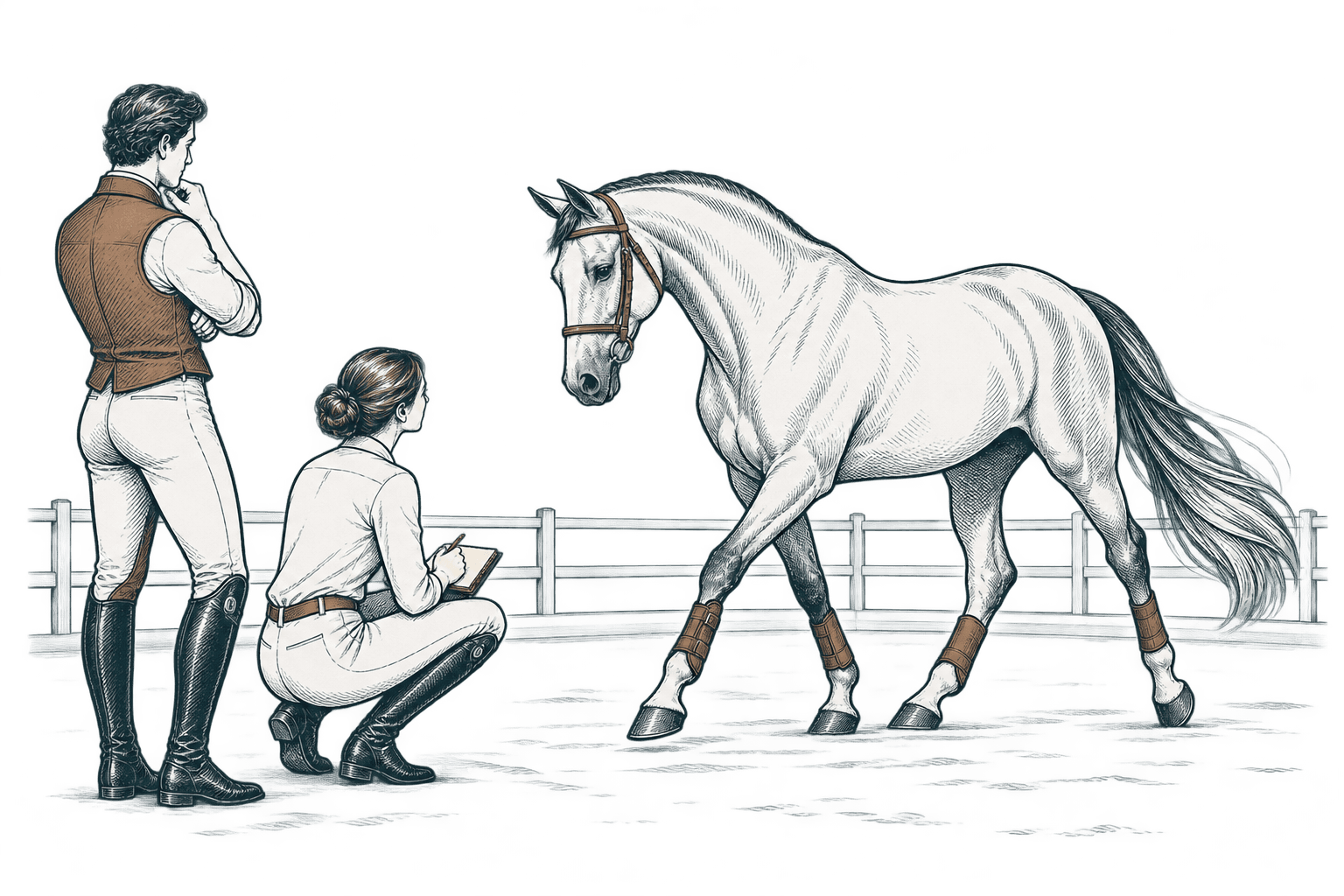

Make space for riding in everyday life.
Travel, time, budget and energy influence whether learning is sustainable. Distinguish fixed requirements from flexible ones: a fixed day with flexibility on location, or a preference for individual lessons with openness to a group.
When comparing lessons, consider the riding element, instructor ratio, preparation time and what the fee includes. Alongside price, consider whether the arrangement fits your routine.

Keep a record of the conversation.
After the lesson, note the instructor’s main points, your impressions and questions. A notebook need not become a scorecard; it helps the next conversation connect with the last one.
- The instructor’s main points
- What I understood and what remains unclear
- What I would like to observe next

Stay curious about the wider equestrian world.
Competition, stable visits, fitting conversations and reading can all broaden your understanding. Bring a question with you, then discuss what you observed with your instructor.